
Explainer: Australia is posturing to regulate Roblox. How? Why? And where to from here?
Within the past week, both the eSafety Commissioner and Australia's Communication Minister put the platform in their crosshairs.

Many could see the smoke well before the fire, but less than a few months into Australia’s social media ban for under-16s, one of the world’s largest video game platforms for that age group is under scrutiny.
As of last week, Roblox, a sandbox game where players can design their own experiences, is in the crosshairs of both the eSafety Commissioner’s office and Anika Wells, Australia’s Federal Minister for Communications.
The eSafety Commissioner, the Australian government agency in charge of policing the social media ban and other online safety matters, issued a formal warning to Roblox focused on moderating and policing its in-game chat features, putting it on notice over concerns around the potential for child grooming.
This was followed by an open letter from Minister Wells, asking for a meeting to explain how Roblox is ensuring the safety of its users, and that it is seeking advice from Australia’s classification board around the game’s PG (parental guidance required for those under 15) rating.
Roblox’s issues are well documented, stemming back to a report from Hindenburg Research who labelled the platform a “paedophile hellscape” back in October 2024. They rightly called out major issues with the platform and how it allowed adults with ill-intent direct access to children, and allowed them to groom children via player-designed games and experiences.
But it’s worth keeping in mind that Hindenburg’s intentions here aren’t exactly pure. Roblox is a listed company on the New York Stock Exchange. Hindenburg Research is an investment firm that profits off shorting stock, which essentially means they want to lower its share price to profit from it.
This is just one example of the nuance here that’s getting lost in the wash.
So let’s break it down. The goal here isn’t to weigh in on this one way or another, but rather leave you better informed about how the platform works, the arguments, how we got here, and how once again, for better or worse, Australia may be leading the charge in attempting to regulate the digital world.
What is Roblox?
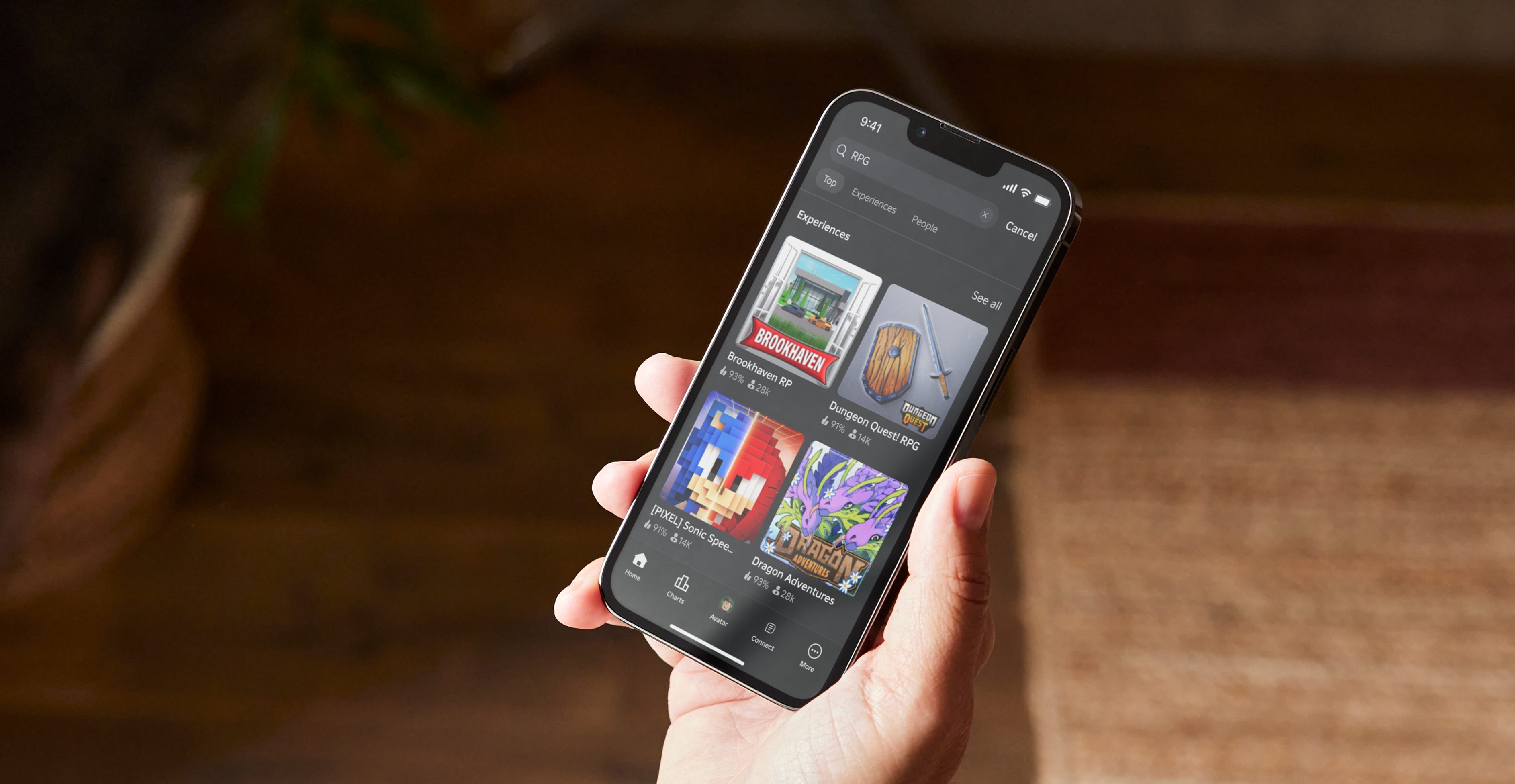
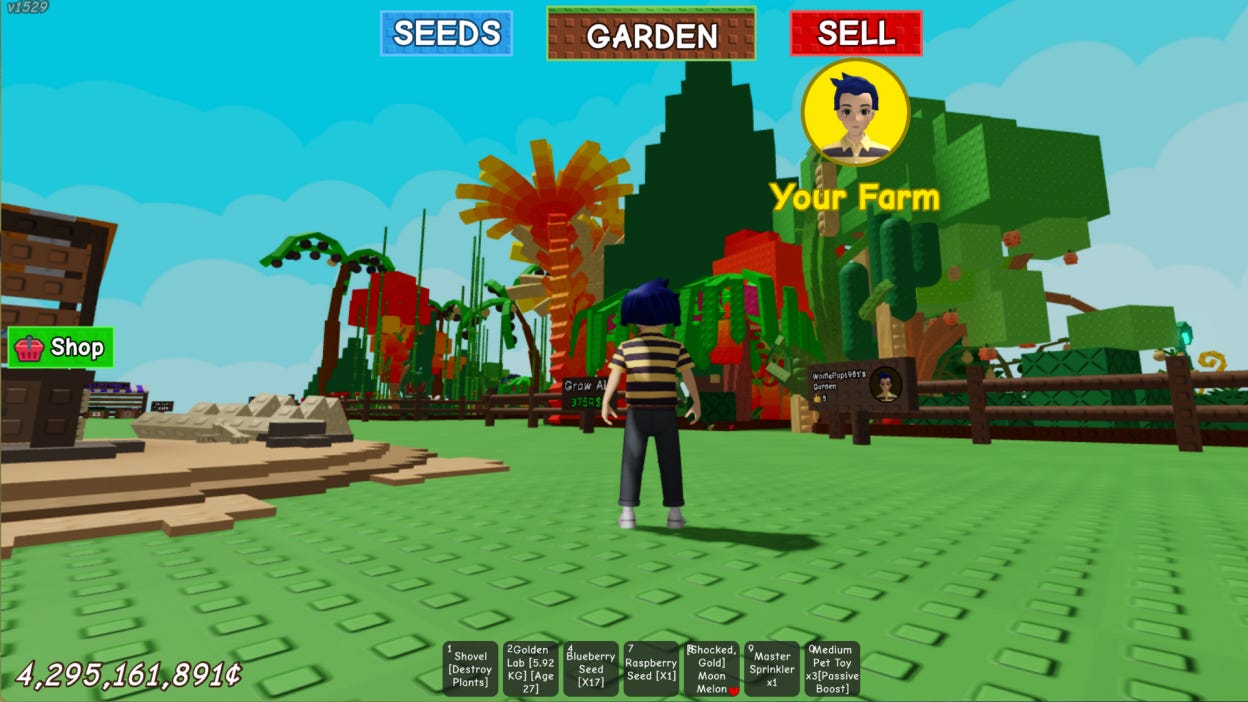
Roblox is best described as a platform for sandbox-style games. Here’s the big misconception: it’s not one game per se, but rather an ecosystem where users can design their own games and release them via a marketplace.
And it is huge. According to Roblox’s latest annual report, the company has 82.9 million daily active users across 180 countries. The vast majority (80%) play via mobile devices, with only 17% playing via a desktop computer and 3% engaging with the game via console. The game’s audience skews young too: over half of its players (56%) are under 16, the majority (81%) are under 24.
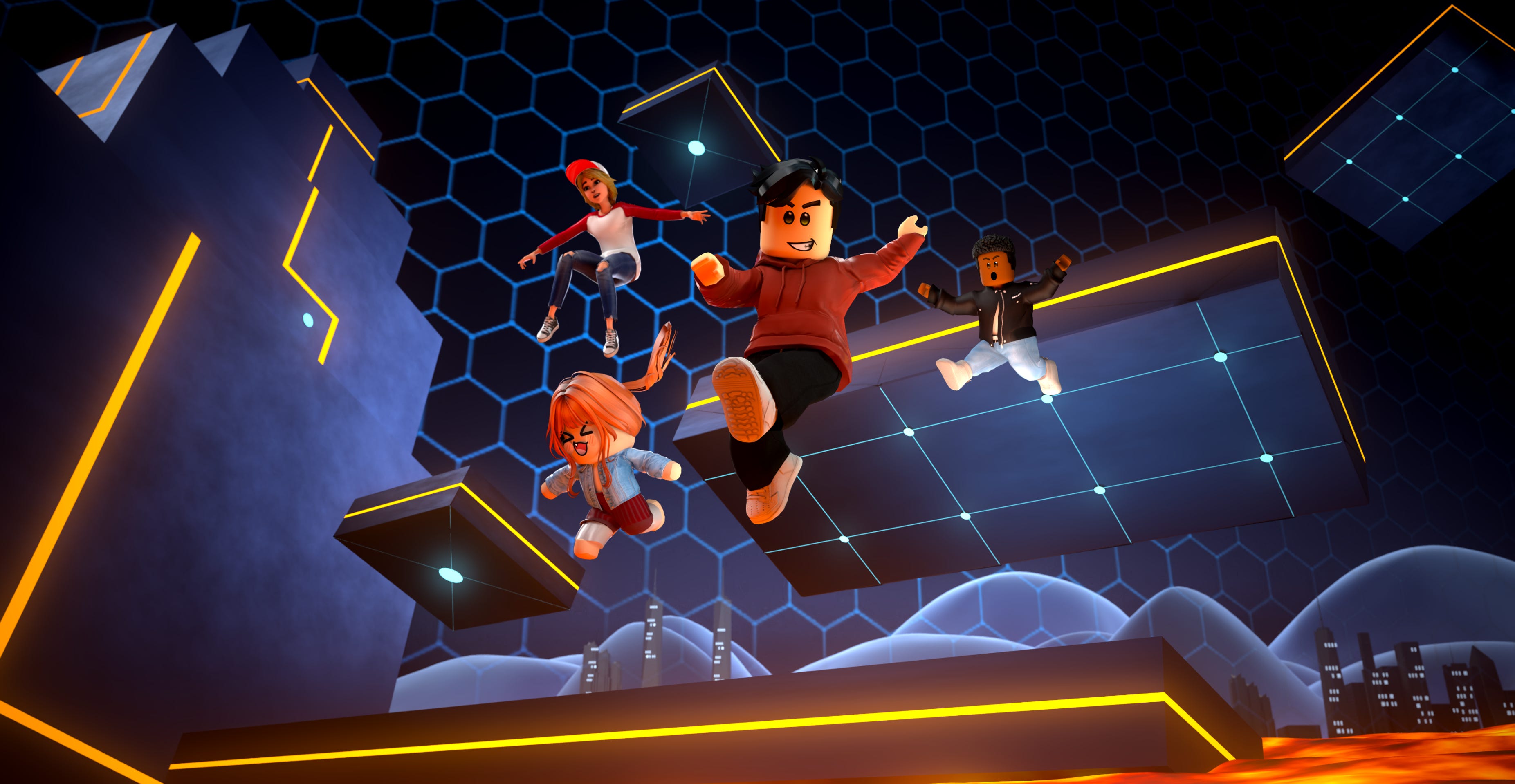
There are all sorts of games (which it instead calls “experiences”) on this platform, from racers through to platformers, and even some monster-tamers (Pokémon-style games). While the number has undoubtedly grown, as of December 2024, the company reported that there are over 14 million experiences overall.
The only thing that they have in common: compared to modern video games they tend to (but not always) sport rudimentary mechanics and graphics, largely because they are player-made.
Roblox is currently trying to court developers into its ecosystem to build more advanced games, and is trying to raise the average age of its player base by doing so. But its most popular games are incredibly basic. As the global games industry is currently trying to reconcile: the kids don’t care about advanced mechanics or graphics.
Financially, Roblox just reported a strong Q4 and its next annual report is due out in May. So its latest annualised financial figures are a little out of date. However, Roblox earned $3.6 billion in revenue in its 2024 financial year (ending 31 December 2024), but overall reported a net loss of $940 million, mainly attributed to engaging more creators to build games on its platform. Despite its scale, it’s not profitable yet.
On that, the company mainly makes money through player transactions — it takes a clip of them — and a subscription service on the platform. Objects in-game cost Robux, which players can buy through real-world currency. The majority of these items are cosmetic (new appearances and animations for your avatar in-game). But Robux can also purchase private servers, or unique features in specific games.
What are the major friction points with child safety on Roblox?
It really revolves around two key points:
Potential for inappropriate communication between minors and adults (potentially with ill intentions) in-game. This is the eSafety Commissioner’s main concern.
Minors being exposed to explicit content in-game, sometimes in high-traffic titles, despite the game holding a PG classification. This tends to be the main thrust of media stories about the platform and the focus of the Communications Minister’s concerns too.
How did we get to the point where Roblox is being pursued by policymakers in Australia?
It’s likely the eSafety Commissioner had an eye on the platform for a while. Its letter is timed about a month after Roblox rolled out its latest protection feature, age verification, which was broadly panned for how easy it is to circumvent.
Though it’s arguable the Australian media played a significant role in spurring on any political action, including the open letter from Communications Minister Anika Wells. Here’s a brief timeline of the major stories:
The first major story on the company appeared in November 2024 from the ABC’s 7.30 Report, a month after the release of the Hindenburg Report. It came at a pivotal moment in Australian digital policy, as the government was setting up the framework of the under-16 social media ban.
A year later, The Guardian Australia released its own story on the matter. Its reporter went onto the platform, posing as an eight-year-old for a week, reporting cyberbullying and explicit content, all with parental safety features turned on.
This month, News Corp Australia, as part of its Let Them Be Kids campaign, released a similar story, with another reporter posing as a 13-year-old on the platform, honing in on games that promoted suicidal messages, as well as explicit in-game content.
It’s also worth noting that News Corp Australia’s Let Them Be Kids campaign was a key driving force for the introduction of the under-16 social media ban in Australia. Which may go some way to explaining Minister Wells’ response.
How easy is it to fix the main problems facing Roblox?
Pretty difficult. But one is easier to address than the other, according to University of Sydney’s Professor Marcus Carter, who studies interactions and play on Roblox.
Talking about minors being exposed to inappropriate in-game content he said: “It’s a probably impossible content moderation challenge.
“There are these role-playing games, where students role-play teachers or students. Now, how can a moderation system, whether that’s human moderators or robots, which often have AI-enabled capabilities in content moderation, know the difference between a high school role-play game and a Sandy Hook school shooting simulator?”
To compound matters, new content is being added to Roblox daily, across most of its popular games.
The second challenge is more pressing in Professor Carter’s view and more addressable. While Roblox has been trying to crack down on the channels in which adults can communicate with minors in-game, gaps still remain.
“Where I think it’s a really significant problem with Roblox in particular is that their monetisation model is really built around enabling these interactions between adults and children,” he explains.
While most other communications channels have been cracked down on by the platform, Roblox’s trade system still serves as a point of connection between kids and adult players. Players of all ages can use this feature to exchange Robux or items for other unique outfits or in-game items for their character.
Professor Carter argues that the transaction itself still creates a touchpoint for predators, where they can use the lure of Robux or a unique in-game item to bait children onto an less secure platform.
“If you’re an adult, $8 is nothing to you. But to a child who doesn’t have any Robux, that’s everything,” he said.
“That’s how we’re increasingly seeing adults get children off the platform. So I think a real challenge for Roblox,” he says. Players are charged a transaction fee to any Robux exchanged during a trade, making this a blind spot somewhat enshrined by one of the company’s means of generating revenue.
What is Roblox actually doing about this?
In fairness to Roblox, the company isn’t idly sitting by letting the complaints pile on. In its latest annual report, Roblox’s second-largest expense ($915 million) is attributed to safety measures.
But that spend is bundled in with infrastructure and game hosting costs, making it hard to deduce to what extent this is being prioritised. Given its renewed focus on safety, its next annual report may break this out from other figures.
Moves, however, are being made. In recent months the company announced the following new features:
AI tool that detects when a player is attempting to pull another player onto a different chat platform and disables the chat.
The active removal of unrated player experiences on the platform. These ratings however, aren’t in line with Australian classifications.
The introduction of age verification, and regulation of chat to only allow those of an age group to chat with one another.
Proactive avatar moderation, an AI tool that checks and moderates changes to an avatar (the player’s character) for offensive content before displaying them to other players.
Most of these were announced in a monthly series the company introduced in October 2024 communicating regular safety updates to its platform.
Where to from here?
The issues with Roblox have a way to run, and there are a few different fronts that require attention too.
Despite content moderation being a consistent challenge for the platform, and a focus point for media coverage, Professor Carter says it’s more complicated than just stamping out all inappropriate content.
“There’s studies that show that if a playground is entirely safe, children never learn to look after their bodies and move through it safely, so they actually end up with more injuries,” he said.
“There’s a comparable argument for digital risky play where digital environments can actually offer children safe ways to kind of encounter and play with objectionable themes... And I think what is age appropriate is a lot broader than what, you know, a lot of the journalists writing about these things realise it is. If you spend much time in the playground, you’ll hear some wild stuff that children say and do when they’re playing.” He does acknowledge though that there are boundaries to that argument.
It may soon get easier for parents to understand what’s appropriate and what’s not on Roblox, at least for Australians. The Classification Board of Australia confirmed to Infinite Lives that Roblox has recently joined the International Age Rating Coalition (IARC), a group dedicated to a globalised age rating system for content. That means that in time, the company will start using Australia’s classification system in its content, in lieu of the broad (and occasionally vague) age recommendations it currently provides.
Meanwhile, the eSafety Commissioner will conduct its own investigation into the communications channels supplied to minors on Roblox. Should they prove inadequate in protecting them, despite their earlier assurances, it could face penalties of up to $49.5 million. That may be the next major flashpoint in this evolving story. Along with any further action following Minister Wells’ meeting with the company.
As Infinite Lives pointed out back in 2024, Australia’s social media ban legislation is fairly open-ended, and at stages during the drafting looked as if it could pivot to include online games. As a nuclear option, an amendment to include a platform like Roblox wouldn’t be out of the question.
Though singling out Roblox may not be the right approach. While Tim Levy, CEO of online child safety platform Qoria, agrees with the government’s latest moves, but warns against its “whack-a-mole” strategy targeting particular platforms.
“The community needs to be empowered through technology to gate access and ensure age-appropriate experiences apply across the entire internet. The technology to achieve this broadly exists today and is used by big businesses to protect employees and corporate data,” he said.
“In short, the government’s efforts to make Roblox safer are meritorious and important, however a more holistic approach to safety is needed to ensure that risk and children don’t simply move to other parts of the internet.”
I’m a parent. Help!
You’ve read this whole article, and it hasn’t answered the one question you had: how do I protect my kids?
For that, I’d turn to Crossplay on Substack. It’s a really excellent dedicated resource for parents grappling with gaming-related challenges. It has over 10,000 subscribers, testament to just how significant this issue is.
There are several articles on Roblox, and its editor Patrick Klepek has been hawkish in calling out all the loopholes—often discovered through his personal experiences with his kids—and issues with Roblox for a while now.
Crucially, he’s a dedicated games journalist, so he understands that element of the platform better than a lot of the general reporters who are dipping in and out of the story. He’s well worth following and subscribing to if you have concerns. I’ve included some links to interesting articles below to get you started.

What do you think about Australia’s latest posturing on Roblox? And are you a parent with kids on Roblox? You’ll surely have better tips than me! Let us all know about them in the comments.
I'm glad that these conversations are happening and that some action is likely to be taken. I'm not sure that it should be as extreme as all minors are banned from online games. Maybe the safer thing would be to ban adults from entering servers populated by kids, in the same way that we don't allow random adults from walking into a school. But that's also an incredibly hard thing to regulate and police in an online space.
I'm not a parent and I don't play Roblox. But I do have pretty extensive experience working with children and I've seen the joy that this game (or ecosystem of experiences) can bring to young people when it is played in a safe and welcoming environment. It can be a genuine place of community for them, but I'm not naive to the fact that it can be incredibly harmful to others. I just hope that policy makers are also talking to kids throughout this decision making process. They're the ones who are being impacted by the current setup and who will be impacted by any changes in the future.
Most of us fell in love with video games when we were children. It's important that we make sure the current generation is being protected as much as possible in the games they are playing, but their choices and opinions are also valid in all of this.
WTF Australia? How are you that normal and decent?